By Jeff Dermond, Washington State Department of Ecology
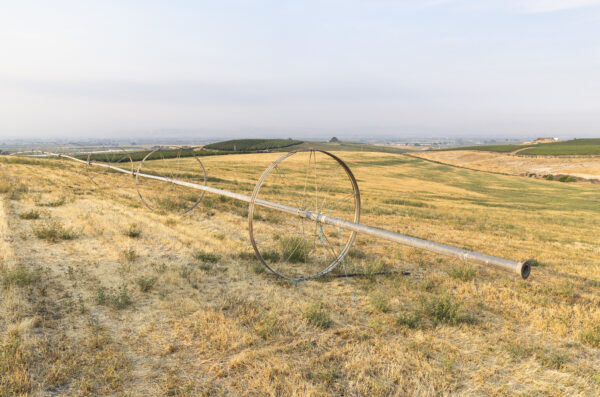
A fourth consecutive year of drought is forcing farmers to make difficult decisions in the Yakima Basin. Photo by David Moskowitch | American Rivers
On April 8, the Washington Department of Ecology issued a statewide emergency drought declaration for 2026.
Newspapers, blogs, and social media buzzed with a wide range of strong reactions:
- “What about the atmospheric rivers back in December?”
- “The reservoirs are full, there’s plenty of water…”
- “But it was raining cats and dogs just last week…”
- “Poor management…they’re already spilling from Bumping Lake…”
Whether from a neighbor, coworker, friend, or family member, you probably heard something similar. Maybe you even have some of those thoughts yourself. So, which is it: drought-pocalypse 4.0, or is the recent drought declaration an unnecessary solution for a problem that doesn’t really exist?
Let’s break down three key questions to find out:
- What is a drought?
- Why declare a drought now?
- How do we know it is a drought?
What is a drought?
There are many definitions of the word drought, depending on where you look. Only one definition matters for our purposes though, and that is the definition that is written in Washington state law. RCW 43.83B.011 states:
“Drought condition” means that the water supply for a geographic area, or for a significant portion of a geographic area, is below seventy-five percent of normal and the water shortage is likely to create undue hardships for water users or the environment.
The same law goes on to define what “normal” means, which is far more interesting than you might think. Perhaps a topic for another post.
Why declare a drought now?
There are many kinds of emergency declarations, but they all have one thing in common: They make tools and resources available to individuals, communities, and businesses to help with the emergency.
Sometimes, that could be financial resources for short-term food and shelter. Other times, it might be labor resources like wildland firefighters or National Guardsmen. Or it may mean regulatory tools that streamline, modify, or bypass normal rules and processes. It all depends on the type of emergency and what will help the most.
Many emergencies happen very quickly, and even the fastest responses are reactive. When an earthquake, flood, or oil spill happens, an emergency declaration helps deal with the aftermath. By contrast, drought is not a single, rapid event. The conditions that cause a drought happen over time, so it is possible to respond proactively with the specific tools and resources that will be most needed.
Washington’s 2026 emergency drought declaration provides a combination of financial and regulatory help. For instance, it authorizes and expedites emergency water rights permits and temporary water right transfers. Additionally, it provides $3 million in drought relief grants for cities, counties, irrigation districts, and other public entities.
How do we know it is really a drought?
There are five major reservoirs high in the Yakima basin. Even when all five are completely full, they meet less than half the annual irrigation water rights on the Yakima River. Aside from the reservoirs, the rest of the basin’s yearly water supply comes from mountain snow that builds up over the winter.
In a typical year, melting snow fills the Yakima River’s tributaries from April to June, and, in turn, the tributaries keep the Yakima River full. Water rights are met by the river’s natural flow, so water in the reservoirs can be saved for later in the year. Small amounts of water are often released from the reservoirs during that time to make room for incoming meltwater, which keeps the reservoirs full.
If winter doesn’t bring enough mountain snow (or if it all melts too early in the year), the river has much less natural flow, so water from the reservoirs must be used in the spring. This means less water remains in storage – not enough to meet all needs through the hot summer months. When this happens, adjustments must be made so the water in the reservoirs can last through September. The adjustment process is called prorationing. When prorationing happens, water delivery is reduced for many of the irrigation water rights in the Yakima basin. These reductions are based on how much water is in the reservoirs and how long it needs to last.
Let’s look at precipitation and snow data from Snoqualmie Pass.
Over the past 36 years, prorationing has happened 12 times, always when there was less than 81 inches of precipitation and 38 inches of snow. These critical minimum amounts of precipitation and snow are specific to Snoqualmie Pass, but as you can see, they are a strong predictor of prorationing.
This year’s data shows that we received nowhere close to the amount of snow we need to avoid prorationing. As a result, prorationed water rights (mostly affecting irrigation districts) have been reduced to just 56% of what they are allotted in a normal year. If a lot more rain falls in the mountains, that number might go up a little. It could also go down even further if the summer is hotter and drier than expected.
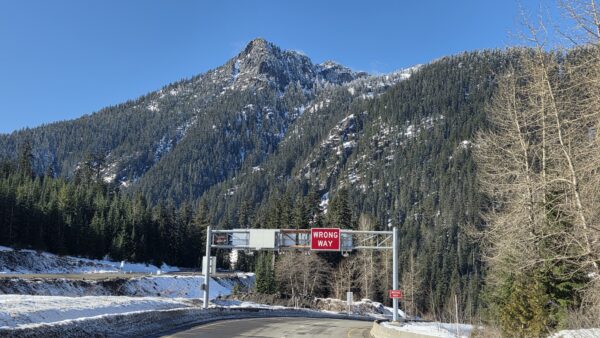
Mountain snowpack will continue to dwindle in the years to come, challenging water users to find innovative solutions in the Yakima Basin. Photo by Susan Woodward | American Rivers
Either way, while many farmers face difficult choices, fish in the Yakima River have no choice at all. A short water supply means no extra water in the river and low flows during the hottest part of the year. As the river level drops, the water gets slower and absorbs more heat from the sun – great news for predators, but very bad news for migrating salmonids.
Native salmon and steelhead evolved to migrate through cold, fast-moving water. Warmer water causes these species to become stressed and disoriented. By contrast, non-native predator species, such as largemouth and smallmouth bass, are quite comfortable in warmer water. To make matters even worse, dense patches of water stargrass turn some reaches of the river into underwater jungles. This gives the predators plenty of hiding places and creates a huge disadvantage for juvenile salmonids making their way to the ocean.
With all this information in mind, let’s look back to Washington state’s definition of drought.
- Is the water supply less than 75% of normal?
- Is the shortage likely to cause undue hardship for water users or the environment?
Yes, and yes.
The data leaves no doubt – we are indeed facing our fourth consecutive year of drought in the Yakima basin, and the timing of the 2026 emergency drought declaration means that drought relief tools and funding can be used to maximum benefit for the most water users.
The coming seasons will be challenging, and the mission, vision, and goals of the Yakima Basin Integrated Plan have never been more important. Long-term success doesn’t come without short-term challenges, but the Integrated Plan is built to overcome those challenges. Together, we can achieve a sustainable, resilient basin and protect water for our farms, fish, and communities for years to come.
###