Reclamation releases August water supply forecast for Yakima basin
YAKIMA, Wash. – The Bureau of Reclamation’s August 2026 total water supply available forecast for the Yakima basin indicates that irrigation demands will not be fully met this season because of winter snowpack less than half of normal, contributing to a fourth consecutive year of drought.
Storage in the Yakima basin reservoirs on Aug. 1 was 57% full with 605,000 acre-feet, which is 80% of average. Precipitation for July was 36% of average and for October–July was 112% of average. On Aug. 1, the amount of water in the snowpack, known as snow water equivalent, was 0% of average.
The Yakima Basin Project began prorationing—allocating limited water supplies among users based on priority and entitlement—and storage control on May 21, 2026. Current projections for the July-to-September period show:
- senior water rights holders will receive 100% of their entitlements
- junior water rights holders will receive 58%, an increase of 2% from the early July forecast.
With prolonged dry conditions limiting reservoir inflows, available water will likely fall short of meeting all demands from the basin’s $4.5 billion agricultural sector while also maintaining the cool, flowing river conditions needed to support native fish populations.
Reclamation will continue to transparently communicate basin conditions via monthly water supply forecast using the latest data each month to reflect changing conditions as they develop.
“Snowpack and hydrologic forecasts are actively monitored using the best available science to guide water operations across the basin, and Reclamation remains committed to reliable water delivery as the region faces yet another drought year. We value our long-standing partnerships with irrigators cross the Yakima basin, whose collaboration is essential as we work together to manage limited water supply,” said Chad Stuart, Reclamation Yakima Field Office manager.
Reclamation manages the water in the five Yakima Project storage reservoirs, along with the basin’s unregulated inflows, to fulfill water rights, water contracts and instream flow obligations. Water shortages in the basin are shared equally by the junior water rights, which represent over half of the water rights in the basin.
The August forecast is based on flows, precipitation, snowpack, and reservoir storage as of Aug. 1, along with estimates of future precipitation and river flows. Other future weather conditions that determine the timing of the runoff and the demand for water also are critical in determining stream flows, the extent to which the reservoirs fill, and the water supply for irrigation.
For more information, visit Reclamation’s website at https://www.usbr.gov/pn/hydromet/yakima/.
Washington water supply update
By Washington Department of Ecology
We’ve got good news and bad news.
The drought declared in April is still in effect and shows no signs of ending any time soon. For those who haven’t been paying attention, we’re now just a little bit past the halfway point of our state’s fourth consecutive drought year.
Read more through the Washington Department of Ecology’s blog: Washington water supply update – Washington State Department of Ecology
Irrigators welcome increase in water allotments
Media Contact: Susan Woodward, YBIP Communications, 360-481-4872
For Release, July 6, 2026
Rain and cool weather bring some relief to drought-stricken basin
YAKIMA, Wash. — An uncommon boost to water supplies for “proratables” in the Yakima basin is expected to make a real difference to Irrigation districts and their agricultural customers this season.
On July 2, the Bureau of Reclamation announced it had raised the total water supply forecast for junior water rights holders from 52 percent of their full entitlements to 56 percent.
The four percent increase would greatly help growers in the basin, who are facing an unprecedented fourth consecutive year of drought, said Scott Revell, district manager for the Roza Irrigation District.
“We were fortunate to experience some cooler overcast conditions and even a little rain in the mountains in late June,” Revell said. “In addition, the prolonged drought combined with a severe downturn in market conditions has forced farmers to allow some land to go fallow, so we’re supplying water to a smaller district this year. All these things coming together at the same time are providing some relief during this time of water scarcity.”
Revell said the four percent increase meant his irrigation district would receive an additional 10,000 acre-feet of water for May through September, a volume equivalent to 10,000 football fields covered by one foot of water.
The situation is better for early June this year than it was during early June in 2025 and 2024, when total water supply for junior water rights was 43 percent and 47 percent, respectively.
Reclamation announces Yakima basin July water supply forecast
YAKIMA, Wash. – The Bureau of Reclamation’s July 2026 total water supply available forecast for the Yakima basin indicates the water supply will not fully meet irrigation demands this season. The estimate of the total water supply available for the June–September period indicates senior water rights will receive 100% full entitlements and junior water rights will receive 56% of their full entitlements.
Storage in the Yakima basin reservoirs on July 1 was 80% full with 857,816 acre-feet, which is 90% of average. Precipitation for June was 77% of average and for October–June was 114% of average.
Reclamation manages the water in the five Yakima Project storage reservoirs, along with the basin’s unregulated inflows, to fulfill water rights, water contracts and instream flow obligations. Water shortages in the basin are shared equally by the junior water rights, which represent over half of the water rights in the basin.
Reclamation will provide an updated water supply forecast monthly using the latest data each month to reflect changing conditions as they develop for Water Year 2026.
The July forecast is based on flows, precipitation, snowpack, and reservoir storage as of July 1, along with estimates of future precipitation and river flows. Other future weather conditions that determine the timing of the runoff and the demand for water also are critical in determining stream flows, the extent to which the reservoirs fill, and the water supply for irrigation.
For more information, visit Reclamation’s website at https://www.usbr.gov/pn/hydromet/yakima/.
Drought, you say?
By Jeff Dermond, Washington State Department of Ecology
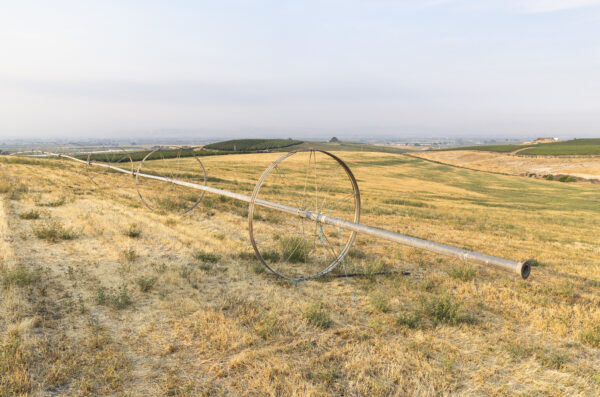
A fourth consecutive year of drought is forcing farmers to make difficult decisions in the Yakima Basin. Photo by David Moskowitch | American Rivers
On April 8, the Washington Department of Ecology issued a statewide emergency drought declaration for 2026.
Newspapers, blogs, and social media buzzed with a wide range of strong reactions:
- “What about the atmospheric rivers back in December?”
- “The reservoirs are full, there’s plenty of water…”
- “But it was raining cats and dogs just last week…”
- “Poor management…they’re already spilling from Bumping Lake…”
Whether from a neighbor, coworker, friend, or family member, you probably heard something similar. Maybe you even have some of those thoughts yourself. So, which is it: drought-pocalypse 4.0, or is the recent drought declaration an unnecessary solution for a problem that doesn’t really exist?
Let’s break down three key questions to find out:
- What is a drought?
- Why declare a drought now?
- How do we know it is a drought?
What is a drought?
There are many definitions of the word drought, depending on where you look. Only one definition matters for our purposes though, and that is the definition that is written in Washington state law. RCW 43.83B.011 states:
“Drought condition” means that the water supply for a geographic area, or for a significant portion of a geographic area, is below seventy-five percent of normal and the water shortage is likely to create undue hardships for water users or the environment.
The same law goes on to define what “normal” means, which is far more interesting than you might think. Perhaps a topic for another post.
Why declare a drought now?
There are many kinds of emergency declarations, but they all have one thing in common: They make tools and resources available to individuals, communities, and businesses to help with the emergency.
Sometimes, that could be financial resources for short-term food and shelter. Other times, it might be labor resources like wildland firefighters or National Guardsmen. Or it may mean regulatory tools that streamline, modify, or bypass normal rules and processes. It all depends on the type of emergency and what will help the most.
Many emergencies happen very quickly, and even the fastest responses are reactive. When an earthquake, flood, or oil spill happens, an emergency declaration helps deal with the aftermath. By contrast, drought is not a single, rapid event. The conditions that cause a drought happen over time, so it is possible to respond proactively with the specific tools and resources that will be most needed.
Washington’s 2026 emergency drought declaration provides a combination of financial and regulatory help. For instance, it authorizes and expedites emergency water rights permits and temporary water right transfers. Additionally, it provides $3 million in drought relief grants for cities, counties, irrigation districts, and other public entities.
How do we know it is really a drought?
There are five major reservoirs high in the Yakima basin. Even when all five are completely full, they meet less than half the annual irrigation water rights on the Yakima River. Aside from the reservoirs, the rest of the basin’s yearly water supply comes from mountain snow that builds up over the winter.
In a typical year, melting snow fills the Yakima River’s tributaries from April to June, and, in turn, the tributaries keep the Yakima River full. Water rights are met by the river’s natural flow, so water in the reservoirs can be saved for later in the year. Small amounts of water are often released from the reservoirs during that time to make room for incoming meltwater, which keeps the reservoirs full.
If winter doesn’t bring enough mountain snow (or if it all melts too early in the year), the river has much less natural flow, so water from the reservoirs must be used in the spring. This means less water remains in storage – not enough to meet all needs through the hot summer months. When this happens, adjustments must be made so the water in the reservoirs can last through September. The adjustment process is called prorationing. When prorationing happens, water delivery is reduced for many of the irrigation water rights in the Yakima basin. These reductions are based on how much water is in the reservoirs and how long it needs to last.
Let’s look at precipitation and snow data from Snoqualmie Pass.
Over the past 36 years, prorationing has happened 12 times, always when there was less than 81 inches of precipitation and 38 inches of snow. These critical minimum amounts of precipitation and snow are specific to Snoqualmie Pass, but as you can see, they are a strong predictor of prorationing.
This year’s data shows that we received nowhere close to the amount of snow we need to avoid prorationing. As a result, prorationed water rights (mostly affecting irrigation districts) have been reduced to just 56% of what they are allotted in a normal year. If a lot more rain falls in the mountains, that number might go up a little. It could also go down even further if the summer is hotter and drier than expected.
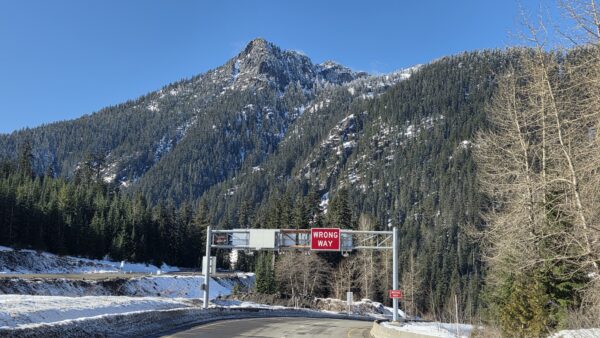
Mountain snowpack will continue to dwindle in the years to come, challenging water users to find innovative solutions in the Yakima Basin. Photo by Susan Woodward | American Rivers
Either way, while many farmers face difficult choices, fish in the Yakima River have no choice at all. A short water supply means no extra water in the river and low flows during the hottest part of the year. As the river level drops, the water gets slower and absorbs more heat from the sun – great news for predators, but very bad news for migrating salmonids.
Native salmon and steelhead evolved to migrate through cold, fast-moving water. Warmer water causes these species to become stressed and disoriented. By contrast, non-native predator species, such as largemouth and smallmouth bass, are quite comfortable in warmer water. To make matters even worse, dense patches of water stargrass turn some reaches of the river into underwater jungles. This gives the predators plenty of hiding places and creates a huge disadvantage for juvenile salmonids making their way to the ocean.
With all this information in mind, let’s look back to Washington state’s definition of drought.
- Is the water supply less than 75% of normal?
- Is the shortage likely to cause undue hardship for water users or the environment?
Yes, and yes.
The data leaves no doubt – we are indeed facing our fourth consecutive year of drought in the Yakima basin, and the timing of the 2026 emergency drought declaration means that drought relief tools and funding can be used to maximum benefit for the most water users.
The coming seasons will be challenging, and the mission, vision, and goals of the Yakima Basin Integrated Plan have never been more important. Long-term success doesn’t come without short-term challenges, but the Integrated Plan is built to overcome those challenges. Together, we can achieve a sustainable, resilient basin and protect water for our farms, fish, and communities for years to come.
###
Reclamation announces Yakima basin June water supply forecast
YAKIMA, Wash. – The Bureau of Reclamation’s June 2026 total water supply available forecast for the Yakima basin indicates the water supply will not fully meet irrigation demands this season. Yakima Basin Project went on prorationing and storage control May 21, 2026. The estimate of the total water supply available for the May 21-September 30 period indicates senior water rights will receive 100% full entitlements and junior water rights will receive 52% of their full entitlements. This 52% value remains unchanged from the early May forecast.
Storage in the Yakima basin reservoirs on June 1 was 94% full with 998,008 acre-feet, which is 105% of average. Precipitation for May was 57% of average and for October–May was 115% of average. On June 1, the amount of water in the snowpack, known as snow water equivalent, was 0% of average.
Reclamation manages the water in the five Yakima Project storage reservoirs, along with the basin’s unregulated inflows, to fulfill water rights, water contracts and instream flow obligations. Water shortages in the basin are shared equally by the junior water rights, which represent over half of the water rights in the basin.
Reclamation will provide an updated water supply forecast monthly—at least through July—using the latest data each month to reflect changing conditions as they develop.
The June forecast is based on flows, precipitation, snowpack, and reservoir storage as of June 1, along with estimates of future precipitation and river flows. Other future weather conditions that determine the timing of the runoff and the demand for water also are critical in determining stream flows, the extent to which the reservoirs fill, and the water supply for irrigation.
For more information, visit Reclamation’s website at https://www.usbr.gov/pn/hydromet/yakima/.
New interactive resource on water rights from Washington State Department of Ecology
Washington State Department of Ecology launched a new resource where users can see how current or upcoming restrictions may affect their water use. If you have a surface water right in the Yakima Basin, visit our Yakima water resource page where you’ll find:
- Current and upcoming restrictions on water rights
- An interactive map to find out if your water right is affected
- More information about how water supply levels could affect your water use
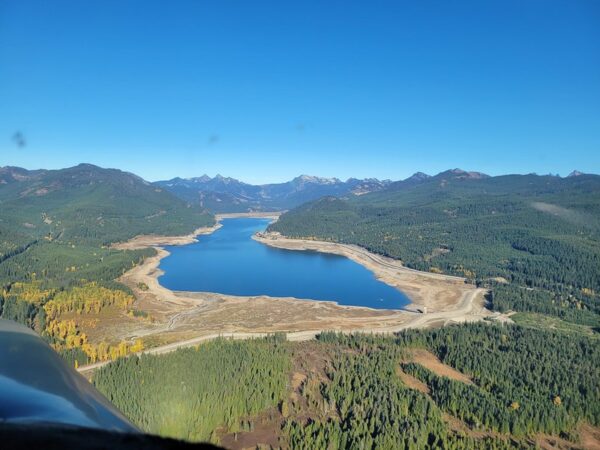
Lake Keechelus at 5% capacity in the first year of a history making drought. Photo by Scott Revell, Roza Irrigation District. October 19, 2023.
Click for more information from Washington State Department of Ecology: https://ecology.wa.gov/…/yakima-basin-water-supply…
Unprecedented fourth consecutive year of drought in the Yakima Basin
Winter snowpack that is less than half of normal has driven the Yakima River basin into a fourth consecutive year of drought — the first time in modern record-keeping that the region has experienced such a prolonged dry period.
Irrigation water for the basin’s agricultural sector, cool flowing river water for native fish, and municipal water supply relying on surface water rights are all in high demand and drought years can result in short supply for all. Yakima Basin Integrated Plan partners are all working together to find solutions to meet everyone’s water supply needs.
To help community members during this challenging time, Integrated Plan partners address some of the most common questions we hear about river flows, water supplies, and the impacts of this drought on the Yakima basin.
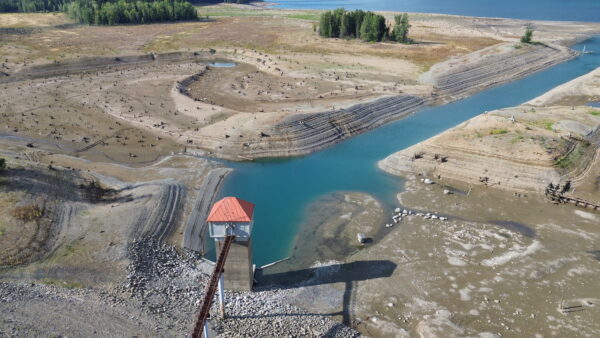
(Bureau of Reclamation Photo by James Reeve, USBR, 9/7/2025)
1. How can we still be in drought after so much rain and flooding in December 2025?
Back-to-back atmospheric rivers that struck Washington and the Yakima basin last year brought record-breaking precipitation. This provided a tremendous boost to water storage in the five major reservoirs in the upper Yakima basin, which had been depleted after three
consecutive years of drought. High reservoirs at the start of the season are very helpful, but they do not provide enough water to last the whole year.
Historically, basin water supplies have also depended on winter snowpack in the Central Cascades that slowly melts over the spring. This natural storage – known as “snow water equivalent” – contains more water than all five reservoirs combined and is often referred to
as the basin’s “sixth reservoir.” Mountain snowpack is very low this year, and the spring and summer are forecast to be hot and dry, leading to a fourth consecutive year of drought. There will not be enough water to meet all demands.
2. Who decides when we are in an official drought?
The Washington Department of Ecology announces when the Governor of the State of Washington has declared a drought. A drought is declared when: 1. A specific area of the state experiences, or is forecasted to have, less than 75% of its normal water supply; and 2.
This shortage is expected to cause undue hardship to water users, agriculture, or the environment. This year, every watershed in Washington has met these thresholds, leading Ecology to extend a drought declaration statewide, and across the Yakima basin for a
fourth consecutive year. Drought has always been a reality in the basin. However, dry periods with less snowpack are expected to become longer and more frequent due to warming average temperatures. This is the first time in modern recordkeeping that the Yakima basin has experienced such a prolonged drought.
3. Why isn’t there adequate snowpack this year?
A winter that was warmer than usual has created a record snow drought across all Western states, including Washington. By March, snowpack in the mountains that feed the Yakima April 2026 River was just 34% of average in the upper Yakima basin and 50% of average in the Naches basin. These conditions are part of a warming trend, leading to more winter precipitation falling as rain instead of snow than in the past.
4. If we’re in a drought, why do I see so much water in the Yakima River?
Water levels in the river fluctuate dramatically depending on seasonal rain, melting snowpack, and water releases from the reservoirs in the upper basin and do not necessarily reflect drought conditions. During summer, the Bureau of Reclamation releases water for irrigation deliveries. This increases river flow but the water has already been allocated to senior, junior, and “proratable” water rights holders, per a landmark legal adjudication in 2019 (Department of Ecology v. Acquavella).
There are also times when Reclamation may need to release water when reservoirs are high and more room is needed to accommodate rainfall and melting snowpack flowing into the reservoirs. Additionally, snow that melts below the reservoirs currently cannot be captured and runs directly into the river system. Both of these things happened in March 2026, leading to high flows in the river.
5. How much water do we need in the Yakima basin and how much do we have stored?
From April through September, farms, fish, and communities in the Yakima basin need a combined total of about 2.5 million acre-feet of water for irrigation, river flows for fish, and municipal and domestic purposes. At their peak in early April, the five main reservoirs in the
upper basin held 93% of their combined capacity, storing 993,000 acre-feet of water. This was 137% of average (determined by 1991-2020 data). Total combined capacity for the reservoirs is about 1.1 million acre-feet. In normal years, snowpack provides more than one
million acre-feet of additional water.
6. Why wasn’t more water captured during last year’s atmospheric rivers?
The Bureau of Reclamation operates the five main reservoirs in the upper Yakima basin – Kachess, Keechelus, Cle Elum, Bumping, and Rimrock – and manages how much water enters the Yakima River and its tributaries downstream. During the atmospheric rivers in
December, warm temperatures caused precipitation to fall as rain instead of snow. Less than 16% of the land area in the Yakima basin drains through a reservoir, so large volumes of water ran straight into rivers, causing flooding and escaping storage. Reclamation did
everything it could to store as much water as was physically possible while also limiting April 2026 downstream flooding. The Yakima Basin Integrated Plan is working to build more infrastructure so more surface water can be captured and stored in the future. This additional storage is essential to the basin’s future.
7. How is water distributed during a drought?
The Confederated Tribes and Bands of the Yakama Nation holds the oldest and most senior rights in the Yakima basin. They are entitled to their full allocation of water for the Tribe’s Wapato Irrigation Project, regardless of drought conditions. However, in late summer 2025,
water supplies became so low that for the first time, even this water right could not be fulfilled.
Proratable and junior water rights holders – mostly irrigation districts that divert water from the Yakima River for farmers – receive reduced allocations during drought, based on river flow and what remains in the five main reservoirs after senior rights are met. The irrigation districts with the most proratable water rights are Roza Irrigation District, Kittitas Reclamation District, and Wapato Irrigation Project, and they have seen their proratable supplies cut to 50% or less in recent severe drought years. The Bureau of Reclamation will need to ration water supplies from April through September again this year. It’s predicted that proratable irrigation districts will receive 44% or less of their full entitlements during the 2026 growing season. A goal of the Integrated Plan is to conserve and store enough water to ensure proratable water rights holders always have at least 70% of their entitlements.
8. How is the drought impacting fish and ecosystems in the Yakima River and its tributaries?
Drought degrades water quality in the Yakima River, contributing to a loss of salmon, steelhead, bull trout, and lamprey. During spring, water is released from the basin’s main reservoirs in strategic pulses to help flush juvenile fish (“smolts”) from the Yakima River before it becomes lethally hot in the summer. However, many juvenile and adult fish still experience conditions that are too warm and shallow – especially in the lower Yakima River – for them to journey to and from the ocean. This loss of juvenile fish has a cascading effect on salmon population numbers that persists for years.
Tribal and conservation partners in the Integrated Plan are working to improve the survival of native salmon species. Water conserved through Integrated Plan projects can be used to improve instream flows to help fish. In addition, projects to improve habitat and passage for native fish are underway. These include removal of a human-made causeway at Bateman Island on the lower Yakima River in January 2026, as well as fish passage improvements that are planned for several diversion dams, including the Wapato Irrigation Project and the Sunnyside, Prosser/Chandler, and Wanawish dams.
9. How are farmers responding to the ongoing drought?
The Yakima River basin is the heart of Pacific Northwest agriculture, growing a wide array of crops that include timothy hay, hops, alfalfa, apples, beans, pears, cherries, pumpkins, sunflowers, sweet corn, and wine and juice grapes. The basin produces one of the largest agricultural economies in Washington, contributing more than $4 billion annually at peak production. In response to recent drought years, growers have installed drip irrigation and ultra-high efficiency sprinklers across thousands of acres of farmland to conserve water. They have allowed some crops to go fallow and prioritized more valuable crops. In addition, they lease water from other water users, pool water between farms, and utilize emergency well permits when water is scarce.
10. How can I help conserve water during the drought?
All water use throughout the basin, even relatively small amounts, matters during a drought. In some cases, even residential water use may be limited if shortages affect more senior water rights. For these reasons, conserving water and building drought resilience is important for everyone. In the short term, you can forgo car washing, water outdoor plants during the cooler times of the day and allow your lawn to go dormant. Over the long term, choosing landscaping that requires little to no supplemental irrigation can help make your property more drought resilient.
###